Spring decor in 2026 favors flexible changes that can work with existing furniture. Botanical forms, soft geometry, restrained color zones and original personalized details can refresh a room when they are planned at the correct scale.
Botanical forms with open space
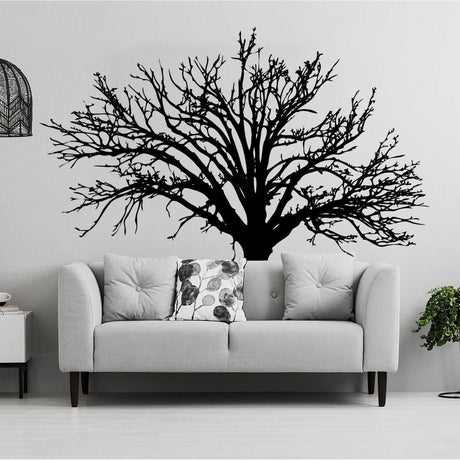
Branches, leaves and simplified flowers can frame furniture without filling the entire wall. Asymmetrical layouts work well around shelves or reading corners when enough clear wall remains visible.
Soft geometric color zones
Arches, circles and broad shapes can define a desk, play area or console. Use two or three coordinated colors and check their appearance against the wall under daytime and evening light.
Small repeated motifs
Dots, stars, leaves and abstract marks can form a loose pattern. Establish a grid or spacing template so small errors do not accumulate across the wall.
Original personalized details
Names, dates or short original wording can create a specific focal point. Avoid protected quotations, logos and copied artwork. Confirm spelling and final dimensions before production.
Product format and surface
Printed decals, cut vinyl and wallpaper-style panels have different surface and installation needs. Check the exact listing. Use a clean, dry, stable and fully cured wall, and test uncertain coatings.
Design for future change
Choose a layout that can remain balanced if furniture moves or one section is removed. Do not assume every removable product is reusable or risk-free on every paint finish.
Frequently asked questions
Which spring colors work together?
Use a limited palette linked by one neutral. Physical samples provide better guidance than screens when matching matters.
Are large shapes harder to install?
They require more alignment and material control. Two people can make wide pieces easier to position.
Can seasonal decals be reused?
Only when reuse is stated for the exact product.